Calendar Based Productivity On Rise
In the recent years, productivity culture revolved around to-do lists. But now in 2025, something surprising is happening-> calendar based productivity apps are making a comeback. It's a response to how much work, peoples attention, and time have changed.


The Problem with To-Do Lists
To feel productive, us humans chase outputs, optimize hacks, and try new things — yet we still feel overworked, behind, or burned out. Why? Because being productive isn’t just about purely doing it. It’s about figuring out the right time and right way to do it.
Then, to do lists came in. They brought structure, let us write down ideas, and gave the satisfaction of seeing completed tasks. Of course, it can be powerful. But over time, they have fallen off due to various reasons.
The cons of to do lists:
- To-do lists don’t account for time or energy
- Priority often gets neglected
- As tasks slowly pile up, it creates anxiety instead of clarity
- They often ignore context on the task process.
To boil it down, a task list might tell you what needs to be done, but not when you’ll do it or if you even can.
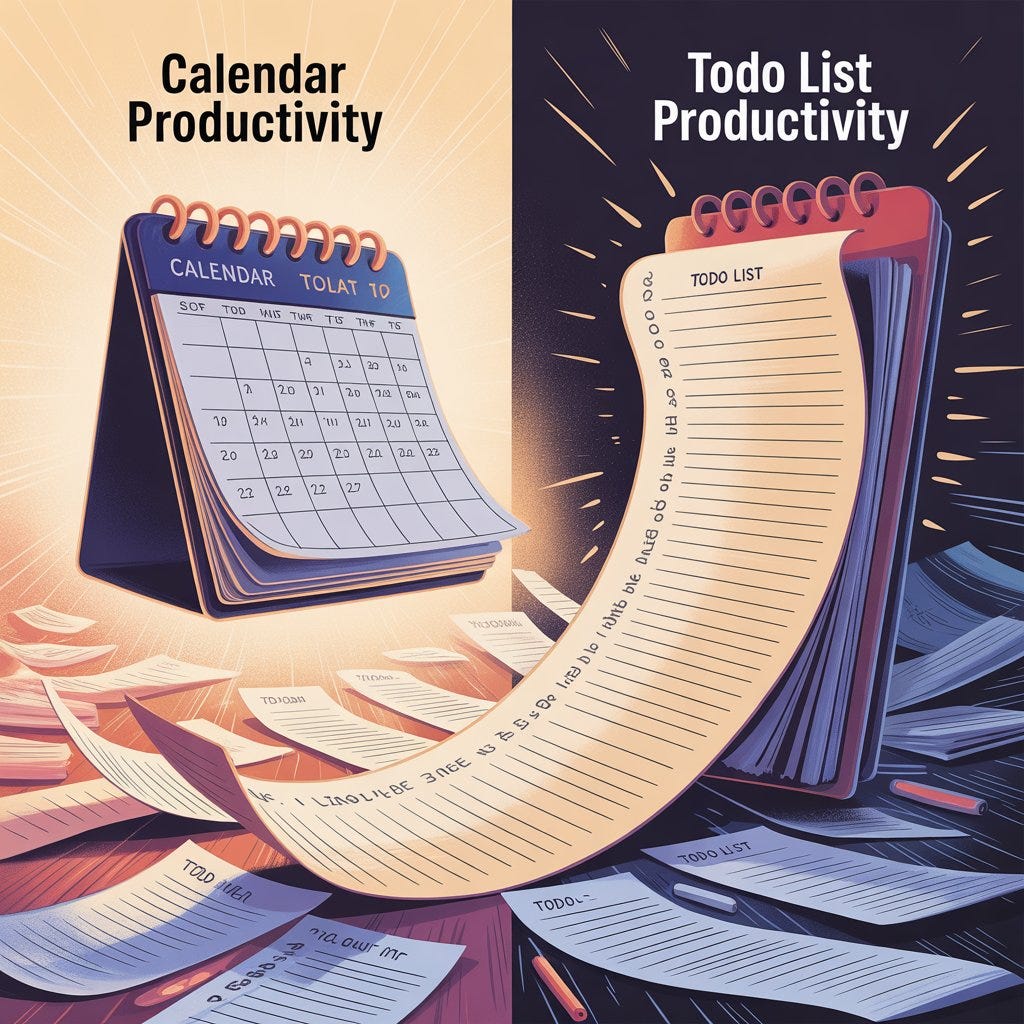
Why Calendar-Based Productivity Works
Calendar productivity apps make up for the previous shortcomings. Instead of asking, “What do I need to do?”, it asks, “When am I actually doing it?” This method forces users to assign time blocks to priorities, whether it’s be work, meetings, workouts, or even breaks.
It’s incredibly effective because:
- It’s more realistic
A calendar reminds users of the fact that there’s only 24 hours in a day. - It helps with decision fatigue.
When your schedule tells you what to do next, so you don’t waste time choosing. - It can help with task prioritization
You assign important work in high energy hours and easier tasks when you’re tired. - It prevents tasks piling up
If it doesn’t fit in the calendar, you have to decide whether it is worth spending time and energy doing it.
Calendar-Based technologies
- Motion — uses AI to automatically schedule your tasks based on deadlines and priorities.
- Reclaim.ai — protects your focus time and reschedules low-priority meetings.
- Sunsama — blends your to-do list and calendar into one intentional planning flow.
- ANCI — uses intelligent scheduling to coordinate with teams, third parties, and customers, increasing team productivity and eliminating the hassle of managing calendars.
These tools help you go from “tasks in theory” to “tasks on the calendar”. Some even adjust your schedule dynamically throughout the day based on real-time changes.
Some people fear calendar planning will make their day feel rigid or robotic. But the goal isn’t to stress about keeping track every minute, it’s to be intentional about how your time is spent.
Time blocking your time is healthy, and shouldn’t be seen as a restriction. Your calendar becomes a mirror for your values and goals and not just your obligations.
The Bottom Line
In 2025, the productivity world is shifting from quantity to quality. Calendar-based productivity supports that shift. It helps you spend less time planning and more time doing. Less guessing, and more clarity. So if you want to prioritize your time, it might be time to switch the up and rising calendar apps.
Get AI scheduling insights, product news, and Bay Area community updates delivered to your inbox.
No spam. Unsubscribe anytime.