The Limits of AI: Automation Stops at the Physical World (For Now)
Most repetition in our daily lives isn’t digital. It’s physical. While AI has dramatically improved efficiency in tasks like writing, coding, and analysis, it struggles to automate real-world activities that require interaction with unpredictable environments and physical objects. In the near term, AI will mainly assist by planning and optimizing these tasks, but true automation will depend on advances in robotics that allow AI to not just think, but act.

One of the biggest promises of AI is efficiency.
From writing emails to generating code, AI has already eliminated a huge amount of repetitive digital work. Tasks that once took hours can now be completed in minutes — or even seconds. For engineers and knowledge workers, this shift has been transformative.
But there’s a gap that’s becoming increasingly obvious: Most repetition in our daily lives isn’t digital. It’s physical.
Doing laundry. Cooking meals. Cleaning. Organizing. These are the tasks people actually want to automate — and they’re exactly where today’s AI still struggles.

The Mismatch: Digital Automation vs. Physical Reality
AI today is incredibly good at processing and generating information. It can summarize documents, write code, and analyze large datasets with impressive speed and accuracy. However, all of these tasks exist purely in the digital world.
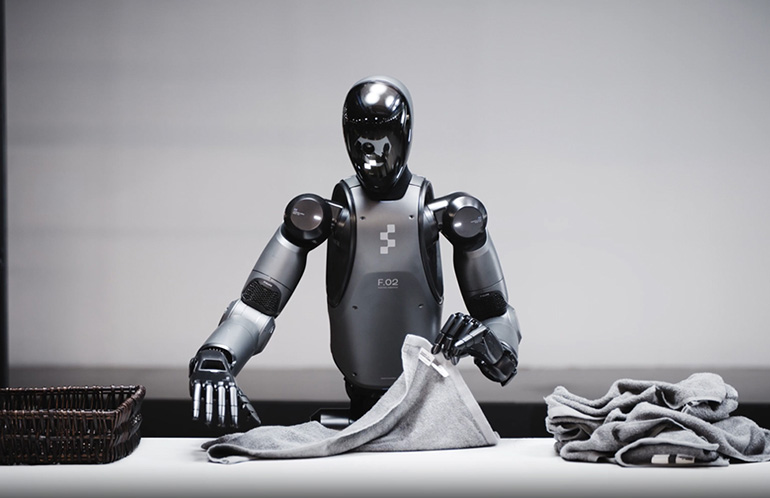
Physical tasks are fundamentally different. They require interacting with unpredictable environments, manipulating real-world objects, and making decisions in real time. Even something that seems trivial — like folding laundry — quickly becomes complex when every object varies in shape, texture, and position.
This highlights an important distinction: automating digital repetition is largely a software problem, while automating physical repetition is a robotics problem.
Why Physical Repetition Is So Difficult to Automate
The challenge of automating physical tasks comes down to a combination of environmental complexity, hardware limitations, and the difficulty of generalization.
In contrast to software systems, the real world is messy and unstructured. A kitchen is not a controlled environment; objects are constantly moving, changing, and interacting in unpredictable ways. Humans handle this effortlessly, but for machines, it introduces a massive layer of complexity.
Hardware also slows everything down. While AI models can be updated and deployed almost instantly, physical systems require manufacturing, testing, and maintenance. Iteration cycles are longer, and mistakes are more costly — not just in terms of performance, but also safety.
Perhaps the biggest challenge, however, is generalization. Humans can walk into a new environment and adapt almost immediately. You can cook in someone else’s kitchen or use a different washing machine without needing instructions. Most robotic systems would lack this flexibility. They are typically designed for narrow, highly controlled use cases, such as assembly lines or warehouse automation.

Where AI Is Already Helping
Despite these limitations, AI is not absent from the physical world — it’s just playing a different role.
Today, AI often acts as a coordination and intelligence layer rather than a direct executor of physical tasks. For example, it can help plan meals based on available ingredients, optimize schedules, or suggest more efficient ways to organize daily routines. In these cases, the human still performs the task, but AI reduces the cognitive effort required to plan and decide.
We are also seeing the rise of smarter appliances. Modern washing machines, ovens, and robotic vacuums are beginning to incorporate AI-driven features that optimize their behavior based on usage patterns. These systems don’t eliminate chores entirely, but they do make them less time-consuming and more efficient.
Another emerging pattern is the use of human-in-the-loop systems. AI provides guidance — through step-by-step instructions, recommendations, or even augmented reality overlays — while humans remain in control of execution. This hybrid model is often more practical than full automation, especially in environments that are too complex or unpredictable for current robotics.
The Future: AI That Can Act
To fully automate physical repetition, AI needs to move beyond software and into the realm of embodied systems — machines that can perceive, reason, and act in the real world.
This is where companies like Tesla, Boston Dynamics, and Figure AI are focusing their efforts. Their goal is to build general-purpose robots capable of handling everyday tasks, from folding laundry to preparing meals.
A key area of progress is teaching robots to learn more like humans. Instead of programming every action explicitly, researchers are exploring methods where machines learn by observing demonstrations, receiving feedback, and improving over time. This approach, often referred to as embodied AI, could significantly reduce the gap between digital intelligence and physical capability.
At the same time, there may be a shift in how environments are designed. Rather than expecting robots to adapt to the full complexity of human spaces, we may begin to design homes, tools, and systems that are more automation-friendly. Standardization and robot-aware environments could play a major role in accelerating adoption.
In the near term, AI will not eliminate physical chores. Laundry still needs to be folded, meals still need to be cooked, and homes still need to be cleaned.
However, AI will increasingly reduce the effort surrounding these tasks. It will help plan, optimize, and guide, making everyday routines more efficient even if they are not fully automated.
In the longer term, as robotics technology matures, we may begin to see a shift similar to what happened in the digital world. Tasks that once required direct human effort could gradually become automated, changing how we think about time, labor, and productivity.

Final Takeaway
AI has already transformed how we work with information. But the most challenging, and possibly most impactful, problems remain in the physical world.
The future of AI isn’t just about generating better answers. It’s about building systems that can take action. And until that gap between intelligence and physical execution is closed, the most repetitive parts of daily life will remain very human.
Get AI scheduling insights, product news, and Bay Area community updates delivered to your inbox.
No spam. Unsubscribe anytime.