What Happens When QA Enters the Room Early
In most of the teams, QA comes into the picture only after the development work is "done." Testers receive the final build, run through edge cases, find bugs, and send everything back to the developers for rework. While this process can work, it often leads to unnecessary delays, missed edge scenarios, and last-minute firefighting before release. But when QA is involved from the very beginning of the Software Development Life Cycle (SDLC), the results are completely different. Early collaboration not only improves quality but also reduces development time, cost, and effort.

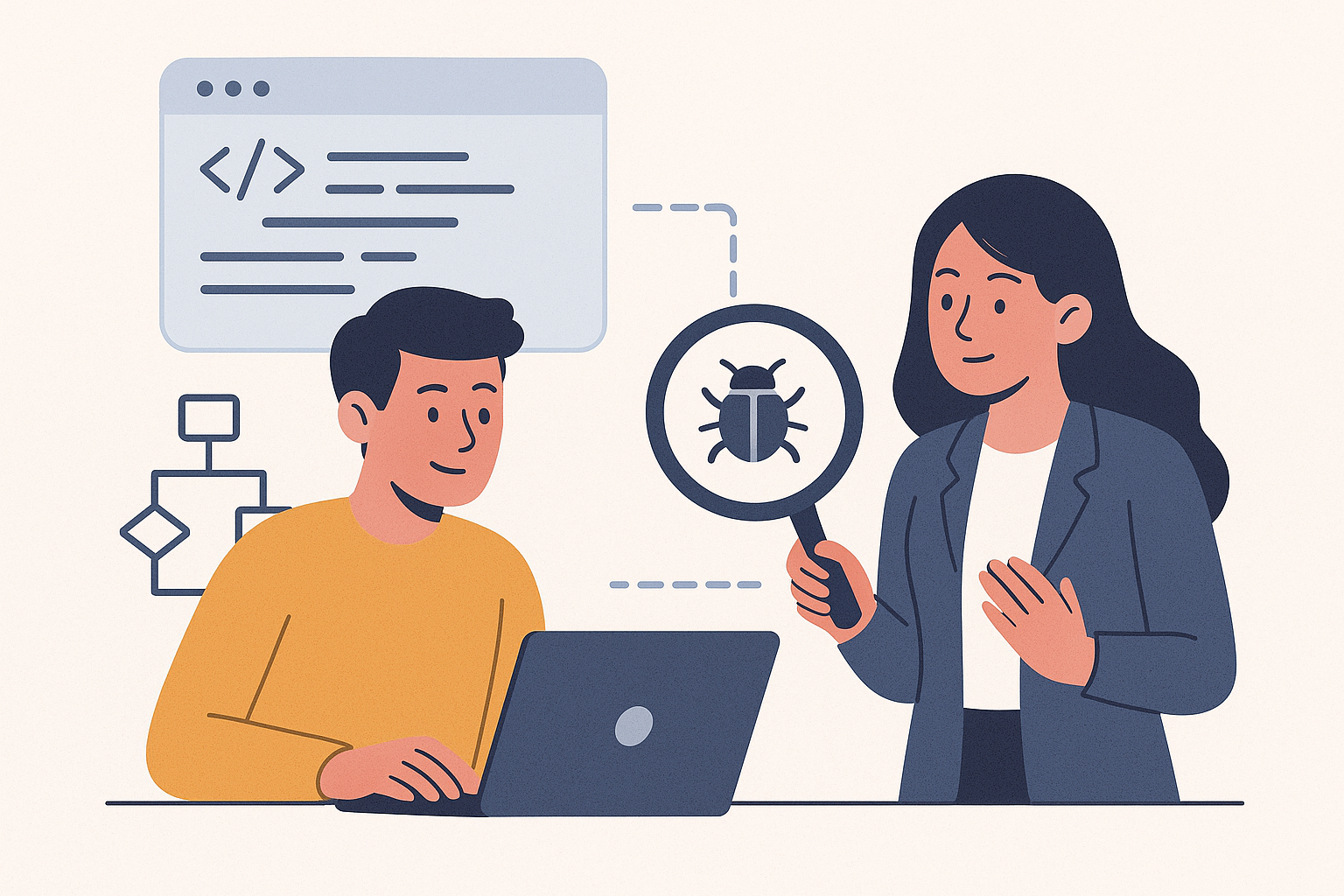
QA Thinks Differently — And That’s Exactly What’s Needed Early On
Developers think in terms of building features. QA engineers think in terms of breaking features by exploring how things can fail, what users might do unexpectedly, and what edge cases need to be considered.
When QA joins during requirement discussions, design meetings, and sprint planning, they bring perspectives that developers might not consider. This early questioning helps teams catch contradictions, missing flows, and ambiguous requirements long before any code is written.
Developers Build Better When They Know the Edge Cases Up Front
When QA enters only at the end, developers usually learn about edge scenarios after coding is complete. That means rewriting, re-testing, and re-validating which is a time-consuming loop.
But when QA defines these scenarios early:
- Developers write more robust logic.
- UI/UX decisions account for negative scenarios.
- APIs are designed with validation and error handling in mind.
- Testability becomes part of the architecture.
Early QA Saves Time, Effort, and Cost
Fixing a bug during the development stage costs almost nothing.
Fixing it after development costs much more in time due to repeated back-and-forth rework and retesting between development and QA teams.
Fixing it after release is significantly expensive in terms of both time and reputation.
With QA involved early:
- Defects are prevented instead of detected.
- Teams avoid back-and-forth rework cycles.
- Requirements don’t need repeated clarification.
- Releases become smoother and faster.
Conclusion: Lesson that I learnt
Over the years of working in QA, I’ve realized something important:
“QA is not just about testing what’s already built, it’s about shaping how it’s built”.
When developers start saying things like: “I thought about your edge case question while coding, so I handled it already.” that’s when you know real collaboration is happening.
It means QA’s perspective is influencing design, logic, and decision-making before the code even exists.
It means the team is building with quality in mind from day one.
And it means everyone is moving from “finding bugs at the end” to preventing them from the start.
That’s the kind of culture shift that transforms teams, improves products, and makes the whole development process smoother and smarter.
Get AI scheduling insights, product news, and Bay Area community updates delivered to your inbox.
No spam. Unsubscribe anytime.