AI in Animatronics
An exploration of how artificial intelligence is transforming animatronics from scripted machines into lifelike, interactive characters. Through personal reflections and the excitement surrounding innovations like the new Olaf animatronic at Disneyland, this article looks at how AI is creating more emotional, immersive, and unforgettable experiences.

The first time I saw an animatronic as a kid, I didn’t think about motors, servos, or code. I just remember staring — completely locked in — trying to figure out how something that clearly wasn’t alive could feel so present. That feeling has stayed with me, and now, with the rise of AI, animatronics are crossing a threshold from clever illusion to something much closer to genuine interaction.
Animatronics used to be about repetition. Pre-programmed movements, timed sequences, and carefully engineered mechanics created the illusion of life. And for decades, that was enough. But today, artificial intelligence is transforming animatronics from scripted performers into responsive, adaptive characters. Instead of just performing, they can now react — and that subtle shift changes everything.
At its core, AI in animatronics allows machines to process inputs — like voice, movement, or environmental cues — and respond in real time. That means a character can hold a conversation, adjust its tone, or even change its behavior depending on who it’s interacting with. It’s not just about better movement anymore; it’s about personality.
I think about this a lot when I visit places like Disneyland. Even before AI, Disney was already pushing the limits of animatronics with incredibly lifelike figures. But now, with AI layered on top, the experience feels like it’s heading somewhere entirely new. Characters aren’t just part of a ride — they’re becoming participants in shared moments.
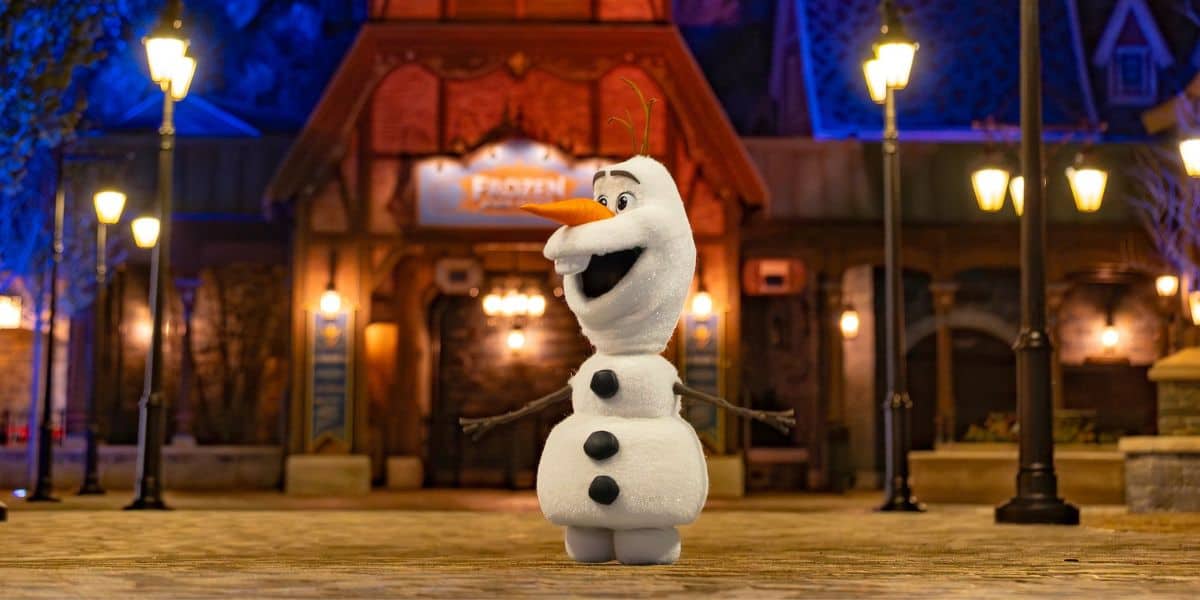
A great example of this evolution is Olaf, who has recently been reimagined as a more advanced animatronic. I haven’t seen the new Olaf in person yet, but just knowing that these characters are getting smarter and more expressive is exciting. Olaf, as a character, is all about warmth, humor, and spontaneity — qualities that are hard to fake with rigid programming. The idea that AI can help bring that spontaneity to life makes the whole experience feel more authentic. It’s cool to see how far things have come, even from a distance.
What makes AI-driven animatronics so compelling is how they blur the line between performance and interaction. Imagine walking up to a character and having it respond uniquely to you — not just triggering a pre-recorded line, but actually processing what you say. That kind of experience sticks with you. It transforms a passive attraction into something personal.
I’ve had moments, even with simpler systems, where I caught myself reacting emotionally to something mechanical. There’s a strange kind of magic in that. You know it’s not real, but your brain doesn’t fully care. Now, add AI into the mix, and that emotional response becomes even stronger. The character feels less like a machine and more like a presence.
From a technical perspective, this shift is fascinating. AI models can handle natural language processing, enabling animatronics to understand and respond to speech. Computer vision systems allow them to track faces, gestures, and even emotions. Reinforcement learning can help refine interactions over time, making each encounter slightly better than the last. It’s a convergence of disciplines — robotics, machine learning, design, storytelling — all working together.
But beyond the tech, what really matters is the experience it creates.
There’s something powerful about storytelling that reacts back. Traditional media — movies, books, even video games to some extent — are still largely one-directional. You consume them. But AI-powered animatronics introduce a feedback loop. You influence the story, even in small ways. A smile, a question, a joke — it all becomes part of the interaction.
I think that’s why this technology resonates so much with me. It reminds me of building projects where you try to create something interactive — something that doesn’t just exist, but engages. Whether it’s a chat application or a collaborative platform, the goal is the same: make the user feel seen. Animatronics, with the help of AI, are doing that in a physical space.
Of course, there are challenges. Real-time processing, latency, and hardware limitations all play a role in how seamless these interactions can be. There’s also the question of expectations. The more lifelike these systems become, the more people expect from them. A slightly delayed response or an awkward movement can break the illusion.
But even with those challenges, the trajectory is clear.
We’re moving toward a future where animatronics aren’t just attractions — they’re companions, guides, and performers that can adapt to us. Theme parks are just the beginning. Museums, retail spaces, and even education could benefit from interactive, AI-driven characters that make learning and exploration more engaging.
Imagine a historical figure in a museum who can answer your questions in real time, or a science exhibit that adjusts its explanations based on your level of understanding. These aren’t far-off ideas — they’re extensions of what’s already happening.
And yet, for all the innovation, what keeps me hooked is still that same feeling from when I was a kid: curiosity mixed with a little bit of disbelief. How does this work? Why does it feel so real?
Seeing something like the new Olaf animatronic — even just in clips or descriptions — brings that feeling back. It’s a reminder that technology isn’t just about efficiency or power; it’s about creating moments. Moments where you forget, just for a second, that you’re looking at wires and code.
AI in animatronics is pushing us closer to those moments than ever before.
And honestly, I can’t wait to see where it goes next.