AI Isn’t Just for Chatbots — It’s Changing How Physical Products Are Built
AI is transforming manufacturing by helping factories learn from the massive amounts of data generated on production lines. By spotting patterns and detecting issues earlier, AI improves efficiency, reduces defects, and prevents costly downtime. The result is a shift from reactive problem-solving to proactive, smarter production.

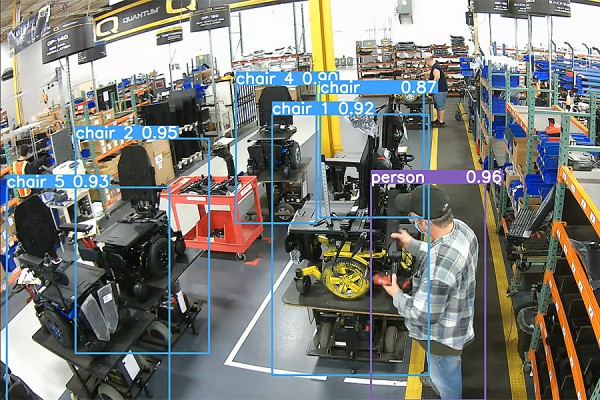
When most people think about artificial intelligence (AI), they think about chatbots, coding assistants, or image generators. That’s AI in the digital world.
There’s another AI revolution happening somewhere less visible: on factory floors, in warehouses, and inside the production lines that build phones, cars, medical devices, rockets, and electronics.
AI is quietly transforming how physical things are made, making manufacturing faster, more precise, less wasteful, and more reliable.

The Big Idea: Teaching Factories to “Notice Patterns”
Traditional factories already use automation. Machines tighten screws, solder parts, and move items down conveyor belts.
But traditional automation follows strict rules. For example, if the sensor goes above 100 degrees, stop the machine; or if the part is missing, reject the unit.
AI is different. AI systems don’t just follow rules, they learn patterns from huge amounts of data and can detect when something looks unusual.
Factories produce enormous amounts of data:
- Images of products
- Test results
- Temperature readings
- Tool measurements
- Operator logs
- Machine vibration signals
Historically, most of that data was stored somewhere, but rarely connected. AI connects it. And once connected, factories can start answering smarter questions:
- Why are defects increasing on Tuesdays?
- Why do products from this machine fail more often?
- Why did yield (the percentage of good products) drop after this supplier change?
What Efficiency and Accuracy Mean in Manufacturing
In manufacturing, when AI improves efficiency, it means production processes run faster and with less waste. AI can increase yield so that more usable units are produced per batch, help factories ramp production faster, reduce equipment downtime, and shorten debugging cycles when issues occur. It can also optimize workflows and reduce unnecessary labor by automatically monitoring processes and identifying inefficiencies.
When AI improves accuracy, it helps manufacturers produce more consistent and reliable products. AI systems can detect defects earlier, reduce the number of faulty units that pass quality control, ensure assemblies are performed consistently, and improve compliance tracking. It also helps engineers identify the root cause of problems more quickly.
These improvements are especially important in hardware manufacturing, where mistakes are expensive. Defects can waste materials, require additional labor, trigger costly recalls, and damage brand reputation. By catching issues earlier and guiding more precise operations, AI helps reduce these risks while improving overall production quality.
1. AI Vision Systems: Teaching Cameras to Spot Problems
One of the most common uses of AI in manufacturing is computer vision. Computer vision means using AI to analyze images from cameras.
Traditionally, visual inspection relied on humans checking parts by eye or rule-based systems (e.g., “if pixel color = X, fail the unit”). These systems are limited. Humans get tired. Rule-based systems break easily when lighting or angles change. AI vision systems instead learn what a “normal” product looks like — and flag anything unusual.

A company like Instrumental builds systems that collect images and data from the production line and use AI to detect subtle defects — even ones engineers didn’t know to look for.
Sometimes defects aren’t obvious. They may look slightly different, but still pass traditional checks. AI can detect patterns across thousands (or millions) of units and say“This version looks slightly different from the others — and units like this often fail later.” That prevents defective products from reaching customers.
Even large automakers like Ford have begun using AI-powered camera systems on their assembly lines to reduce rework and prevent costly recall issues. Optimizing these factory systems means fewer defective products shipped, less waste, less rework, and higher customer trust.
2. Finding the Root Cause Faster
One of the hardest parts of building hardware is debugging. In software, if something breaks, you can look at logs and update the code.
In hardware, a failure might require a lot more steps in debugging — disassembling physical products, stopping production, quarantining inventory, checking supplier batches, and investigating tools or operator shifts.
This is slow and expensive. AI changes this by linking together images of each product, test results, assembly steps, serial numbers, and machine data
For example, Instrumental emphasizes “traceability” — meaning every product has a history. If one unit fails, engineers can digitally “replay” how it was built. Instead of physically tearing products apart, they can do a virtual teardown. That reduces investigation time, production downtime, scrap, and customer impact
AI essentially turns hardware debugging into something closer to software debugging.
3. Predictive Maintenance: Fixing Machines Before They Break
Factories rely on machines — motors, pumps, robotic arms, soldering tools. When a machine breaks unexpectedly, production stops. That’s called unplanned downtime, and it’s very expensive. Predictive maintenance uses AI to monitor signals like vibration, temperature, pressure, and sound.
The AI learns what “healthy” behavior looks like, and when patterns shift, it predicts anomolies and maintenance requirements. This allows teams to fix machines before breakdowns happen.
According to analysis highlighted by McKinsey & Company, advanced AI-driven manufacturing sites have seen major improvements in productivity, quality, and performance when AI is scaled properly.
Similarly, the World Economic Forum Lighthouse Network recognizes factories that use digital and AI tools to dramatically improve efficiency and sustainability.
The pattern is consistent:
AI reduces downtime.
Less downtime = more stable output.
4. Reducing Human Error with Smarter Procedures
Not all manufacturing problems are machine problems. Many come from confusing instructions, outdated documentation, poor coordination between teams, or miscommunication during shifts. In aerospace and complex hardware environments, procedures can be hundreds of steps long.
That’s where companies like Epsilon3 come in. Epsilon3 builds AI-powered systems that help teams execute procedures step by step, track progress, and ensure compliance.
Instead of static PDFs, spreadsheets, and tribal knowledge, teams get structured workflows that reduce variability. This increases consistency, audit readiness, accuracy, and safety.
5. Contract Manufacturers and AI
AI isn’t just for tech giants. Electronics manufacturing services (EMS) companies, like Semi-Kinetics, also benefit from AI.
These companies build products for multiple customers, often handling many product variations, frequent changeovers, and complex testing requirements. AI is able to help them detect defects across product types, optimize scheduling, improve yield, and accelerate problem resolution.
For high-mix manufacturing, small efficiency gains compound quickly.
The Shift: From Reactive to Proactive Manufacturing
Traditional manufacturing — defect is found → investigate → fix.
AI-enabled manufacturing anticipates — something looks slightly off → intervene early → prevent downstream failure.
That shift from reactive to proactive is the real transformation.
Factories become systems that learn continuously, adapt over time, improve automatically, and surface insights humans might miss
Why This Matters
AI’s impact on software is visible — new apps, chatbots, assistants.
But AI’s impact on hardware affects cars we drive, medical devices used in hospital, consumer electronics, and renewable energy systems
It improves sustainability (less waste), reliability (fewer failures), speed to market and cost efficiency.
AI is no longer just about generating text. It’s about teaching factories to see better, learn faster, and make smarter decisions about the physical world.