The Goldilocks Window: Why Vertical SaaS Has the Right to Win the Agent Era
For the next two to four years, AI agents will not compete against other agents. They will compete against labor. That is the Goldilocks Window — and it will not stay open.


Sean Green has been selling software to art galleries for nine years. His company, ARTERNAL, is the kind of vertical SaaS that the AI-native crowd has spent the last eighteen months writing obituaries for. Niche industry. Modest ACV. Sticky customers. Roughly $450 a month in revenue per gallery.
In Q1 of this year he shipped his first AI agent. A registrar named Reggie that handles the entire shipping coordination role inside a gallery, end to end. Reggie does not assist the registrar. Reggie is the registrar.
His new contract value for that one agent is around $1,700 a month. The path is to $7,500 to $8,000 a month per customer once Sally (sales), Dana (finance), and others ship. He calls what ARTERNAL is becoming a vertical agent company, not a vertical SaaS company. The distinction matters.
That is not an unusual story right now. It is the story.
The Reframe Why this window is open
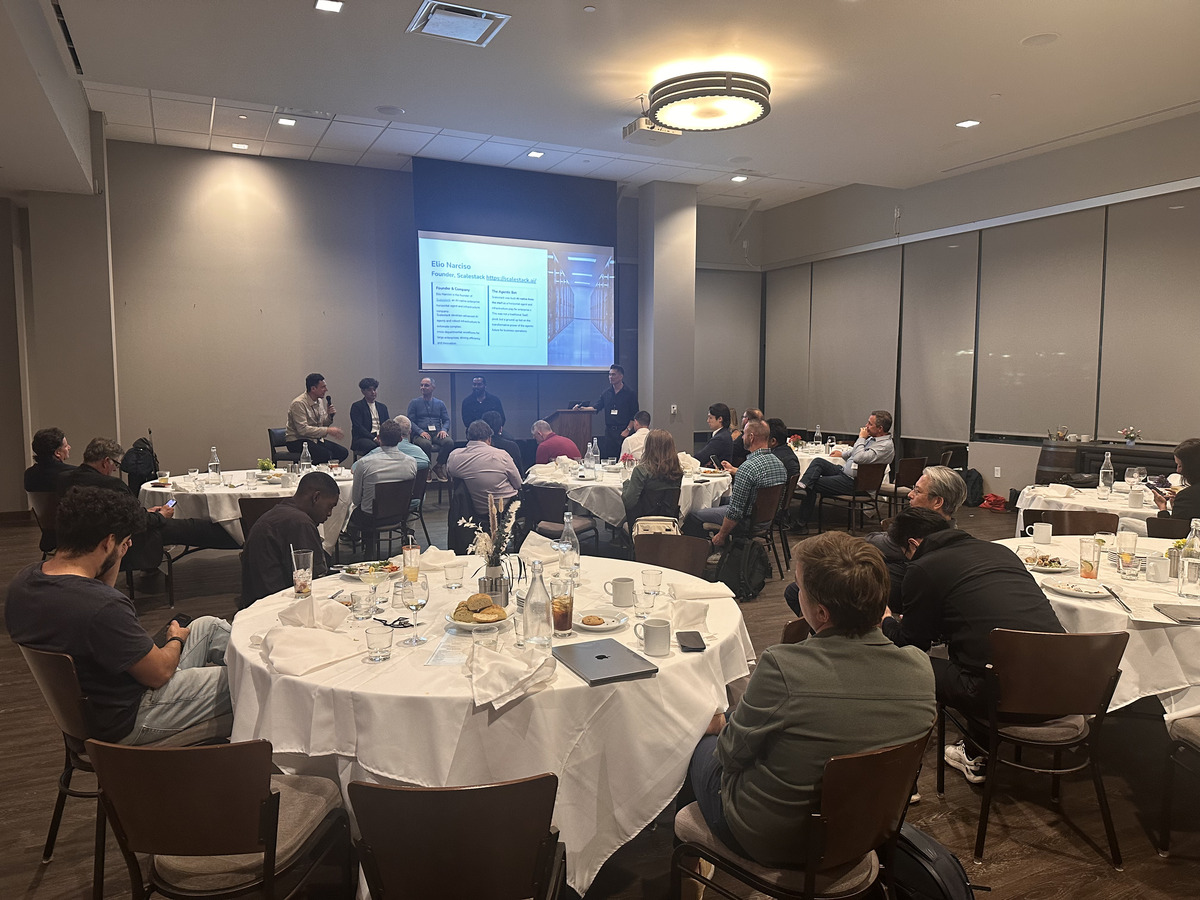
At a founders dinner I attended last week, the moderator made an observation that rearranged how I think about the next two years of B2B software:
That is the Goldilocks Window. For a short period of time, possibly two years, possibly four, the comparable for an AI agent is not another AI agent. It is the salary, benefits, and management overhead of the human currently doing that work.
The math is brutal in the customer's favor. An $8,000 a month employee replaced by a $2,000 a month agent that works 24 hours a day, never quits, never asks for a raise, and gets better every quarter. The CFO does not need a deck for that decision.
For the software vendor, the math is just as interesting. The same customer who was paying $5,000 a year for a CRM seat is now paying $20,000 a year for an agent that replaces a role. Same customer, four times the contract, less seat-based pricing pressure, and a moat that compounds with usage.
That window is open right now. It will not stay open.
The Advantage Why vertical incumbents have the structural advantage
Three things are true about a nine-year-old vertical SaaS company that are not true about a six-month-old AI-native startup chasing the same market:
1. Customer relationships. The first conversation is free. Sean did not have to cold-email anyone. He called clients who had ignored him for two years and they took the meeting because the question changed from "switch your software" to "replace this role." That is a different conversation.
2. Proprietary data. Foundation models are commodities. The grounding layer is not. A decade of vertical-specific workflows, schemas, and edge cases is the training set that makes an agent actually work in the field. A horizontal AI startup does not have it. A vertical incumbent does.
3. Persona-level pain knowledge. Elio Narciso, founder of Scalestack and the third panelist of the evening, said something most operators miss: customers are drowning in their own products. You have to put words to a pain they cannot articulate. Nine years of customer conversations is the dataset that lets you do that. Six months of user interviews is not.
The vertical SaaS company that was getting eaten by AI-native upstarts last year is, this year, holding the only assets that matter.
The GTM Reset What changes operationally
The Goldilocks Window does not just change pricing. It rewrites the go-to-market motion.
The end of "here's the product, figure it out." Evan Chen, founder of Akia, described how his hospitality guest-messaging SaaS made the transition. The old self-serve buyer is gone. The new buyer is a GM or a CFO who wants an outcome, not a configuration screen. Pure platform plays are losing to platform-plus-forward-deployment plays.
Pricing anchors to labor, not seats. The right anchor is the fully loaded cost of the role being displaced. If the role costs $96,000 a year, the agent is priced against that, not against a $50 per seat benchmark.
System of record plus system of action. Acquirers, and customers, increasingly want both. A system of record without an agent layer is yesterday. An agent without proprietary data underneath is a demo.
Forward deployment is GTM, not professional services. Elio's framing on Scalestack was the sharpest version: deploy the solution engineer alongside the platform. Prove the outcome inside the customer's own data in the first two weeks. That is what closes deals in 60 days instead of nine months.
The Closing What closes the window
Two forces will eventually compress this opportunity.
The first is agent-on-agent competition. When every vertical has three credible agent offerings and every customer has tried two of them, the labor comparable disappears and margins start to look like SaaS margins again, then worse.
The second is foundation labs shipping into your vertical. The market has already seen this. Harvey, the legal AI darling, got hit when foundation labs released legal-tuned features. Monday.com, in horizontal project management, got hit. The pattern is consistent: if the vertical is large, generic, and underserved, the foundation lab will eventually walk in.
The protection is depth of data and depth of workflow. Generic verticals close fast. Deep verticals (regulated industries, complex multi-party workflows, proprietary data sets that took a decade to assemble) stay open longer. Sean's art galleries qualify. Evan's hotels qualify. Elio's enterprise GTM data infrastructure qualifies. Each one has nine to twelve years of customer-specific data that a foundation lab will not bother to replicate.
The Playbook Five questions for this quarter
- Audit. Which of the three incumbent assets (customer relationships, proprietary data, persona-level pain knowledge) do we genuinely have, and which are we pretending to have?
- Target. Inside our customer's organization, which single role represents the highest labor cost and the most repetitive workflow? That is agent one.
- Replace, do not augment. The valuation premium goes to agents that replace a role end-to-end. Copilots that "help" are priced like features.
- Anchor pricing to labor. If the role costs $X, the agent is priced at 20 to 30 percent of $X. Per seat is dead.
- Distribute through the warm channel first. The two-year-cold customer who now takes the meeting is the first sale. Do that ten times before chasing net-new.
The Close
The Goldilocks Window is not a permanent state. It is a transition between the SaaS era and whatever comes after.
The companies that walk through it will look very different in 24 months. They will have fewer seats and more agents, higher ACV and lower headcount inside the customer, and a margin profile that rewards data depth instead of distribution scale.
The companies that do not walk through it will be the SaaS that the winners acquire for parts.
The window is open now. It will not be open in 2028.
Get AI scheduling insights, product news, and Bay Area community updates delivered to your inbox.
No spam. Unsubscribe anytime.